New Study Shows Only One Woman in UK Science Curriculum, Prompting Immediate Updates
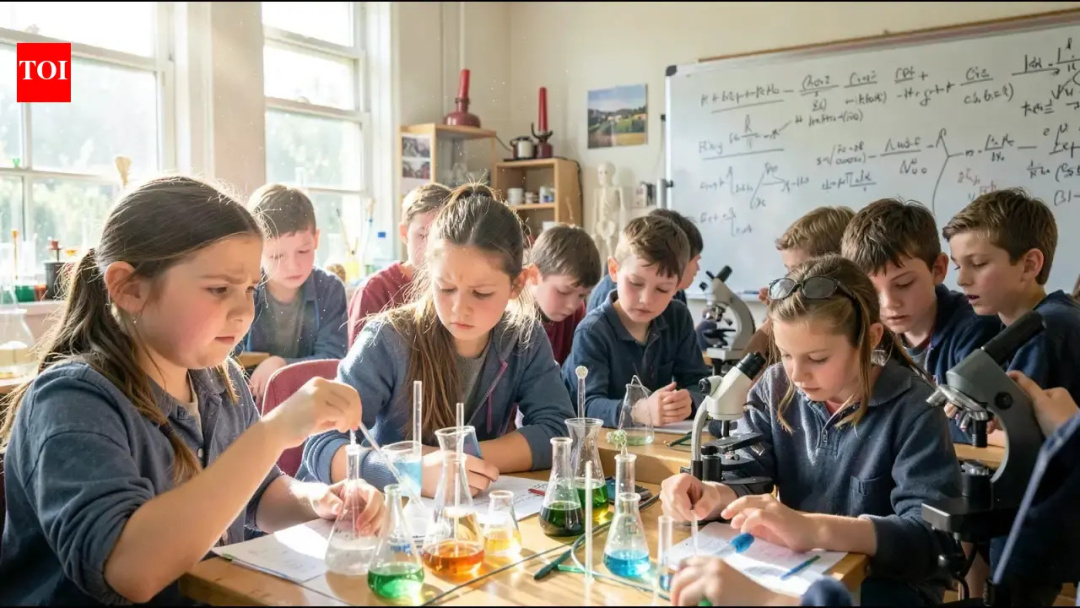
The UK science curriculum has just been upgraded to reflect the absurdly low representation of women, with only one female scientist, Rosalind Franklin, acknowledged among 86 prominent figures. This upgrade comes after a University of Cambridge study illuminated the glaring oversight, highlighting that such minimal female representation could significantly deter young girls from pursuing careers in STEM fields. With only a single mention of Franklin's contributions, which are highlighted in just one specification, the urgency for change is palpable.
In the world where compulsory education spans the breadth of biology, chemistry, and physics, one might expect a diverse array of contributors. Instead, the curriculum presents a veritable boys' club, with most scientific achievements credited to men, leaving students with a skewed perception of who science belongs to. The researchers recommend an immediate overhaul, advocating for the inclusion of women like Marie Curie and Lise Meitner alongside their male counterparts, because it’s clear that the message of equality hasn’t quite made it into the classroom.
Objects of Questionable Importance
Must Have Sponsors.
As the study examined specifications from six major UK examination boards, it became evident that the lack of female representation not only diminishes the role of women in science but also influences the choices young girls make about their future studies. It’s time to face the facts: when girls see only men celebrated in science, they might think, "Why even try?" The authors argue that exposing students to the stories of women scientists isn’t just beneficial; it’s a necessity for cultivating interest and participation in STEM from an early age.
The findings reveal a stark correlation: as students progress into A-levels, the gender disparity widens even further. Only three women are mentioned among 181 scientists, highlighting that while girls excel in science during their early schooling years, this encouragement dwindles as they advance. In a landscape where representation matters, this research exposes the uncomfortable truth that the current educational materials are essentially setting girls up to abandon their scientific aspirations.
Integrating Women's Contributions in Education
The researchers involved in this study not only emphasize the need for curriculum changes but also recognize that merely adding names won’t solve the issue. They advocate for a systemic approach to ingraining the contributions of female scientists into the curriculum, suggesting small yet impactful changes that can align educational practices with the reality of women's contributions to science. Their efforts are backed by new technological developments, including an app designed to assist teachers in integrating these vital stories into classroom discussions.
Reality Check
Meanwhile, in this world of educational reform, one can’t help but wonder what additional layers of absurdity await us. What will be next? A requirement for school children to take a mandatory class on the achievements of women in science as an optional elective that may or may not count towards their final GPA? It’s clear the path to representation is steep, and as the curriculum evolves, expectations must also shift accordingly. Schools are now urged to include not just women’s names but their accomplishments, solidifying their place in the history of science as if this is a groundbreaking realization.
As institutions scramble to bridge the gap between historical oversight and modern expectations, students might soon find themselves in a classroom that finally reflects a more balanced portrayal of scientific achievements. Until then, the question remains: how thoroughly can these changes be implemented before the next generation of girls decides that science is simply not for them?