Knesset Announces New Gender Parity Initiative: Men to Wear 'Women' Badges
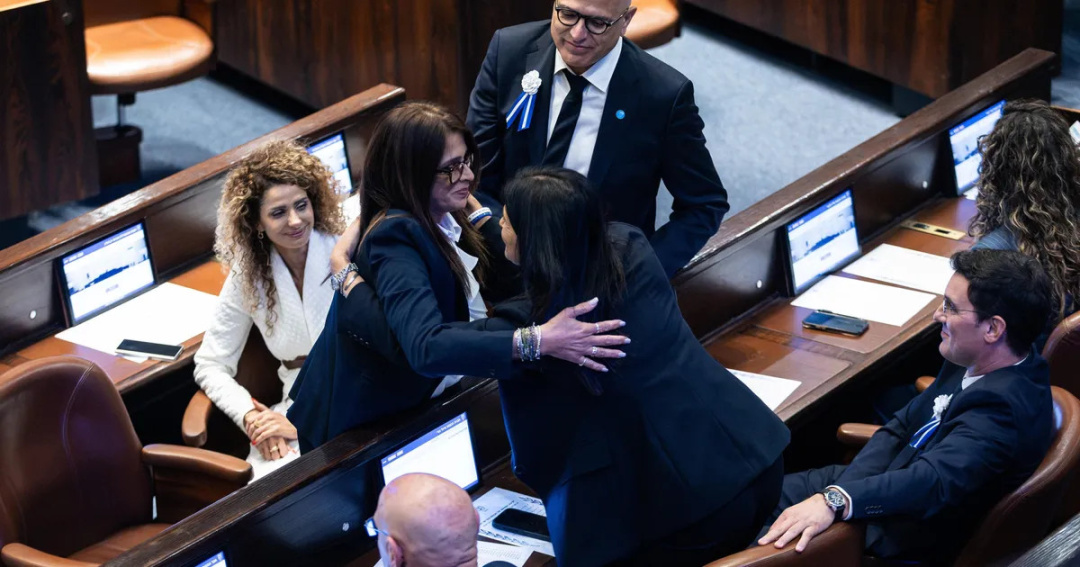
The Knesset has boldly declared a new initiative aimed at bridging the gender gap within Israeli politics. In a shocking twist that has sent ripples through both feminist circles and casual observers alike, they announced that male members will now be required to don badges that read "I Support Women" during official sessions. This initiative is intended as a symbolic gesture to highlight their commitment to gender equality, despite women currently making up only 27.5 percent of the Knesset with no female party leaders in sight.
The badges, which are said to feature a striking pink and purple color scheme, are designed to be eye-catching and serve as a conversation starter about female representation in politics. However, critics have already pointed out that the move may distract from the actual issues at play, such as the fact that in Netanyahu's political bloc, only 13 percent of representatives are women, and certain parties explicitly bar women from running.
Objects of Questionable Importance
Must Have Sponsors.
Additionally, the Knesset plans to roll out a series of mandatory workshops for all male MKs, where they will engage in exercises aimed at understanding the "female experience"—which, in this context, is expected to involve watching empowering TED Talks and sharing their feelings about how hard it must be for women in politics. These workshops culminate in a certification program titled "Empowered Allyship: The Men’s Edition," which will be graded based on participation and the ability to recite the phrase "feminism is for everyone" without laughing.
Meanwhile, the initiative has sparked debates around the actual effectiveness of such measures. While some see it as a step toward change, others question whether wearing a badge is enough to address the deep-seated issues of religious radicalization and the overall marginalization of women within the political system. The former MK from Likud has publicly stated that such tokenism only serves to weaken the role of women further, adding that real change requires more than superficial gestures.
The Compliance Fee for Gender Representation
In light of these developments, a new compliance fee will be instituted for parties failing to meet the Knesset's diversity standards. Any party with less than 30 percent female representation will incur a monthly penalty, with funds redirected to support women’s political initiatives. This new fee structure is expected to create an interesting dilemma for party leaders: to either comply and risk losing their male base or to face financial repercussions while maintaining the traditional power structure.
The Complexity of Gender Representation in Politics
As the badges are rolled out, an additional layer of complexity has emerged. Men in the Knesset will also be encouraged to share their experiences of wearing the badges on social media, using the hashtag #KnessetForWomen, which is already facing scrutiny for being more about personal branding than actual support for women. Some MKs are reportedly planning to host photo-ops in front of the Knesset with their badges, claiming it’s their way of leading the charge for gender parity while maintaining their positions of power.
In the grand tradition of performative allyship, this initiative raises more questions than it answers about the future of gender representation in Israeli politics. Are we witnessing the dawn of genuine change, or merely the latest fashion trend in political correctness? The Knesset's badges are set to become a new standard in political fashion, as they continue to insist that while women may struggle for leadership roles, at least men can proudly declare their support with a simple accessory.