New Study Reveals Women Must Develop Superhuman Strength to Avoid Heart Attacks
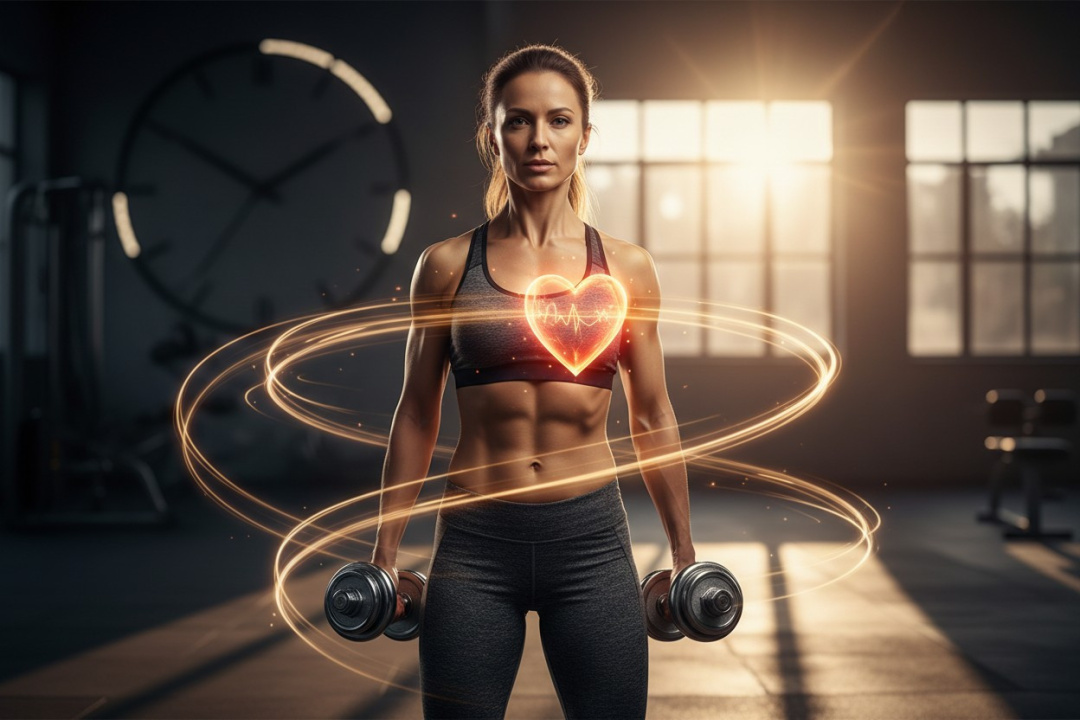
In an unprecedented revelation, recent research has shown that women can reduce their risk of heart attacks, but only by engaging in an intense regime of strength training that would make even superheroes blush. This new study, freshly published in the Journal of the American College of Cardiology, emphasizes that merely lifting light weights or doing a few squats is insufficient; women must treat their fitness routines as an Olympic-level qualifying event.
The study's findings indicate that women who engage in at least two hours of weekly resistance training can lower their heart attack risk by an astounding 44%. This statistic, however, comes with a caveat: it implies that women must navigate not only the gym environment but also the overwhelming societal pressures to be fit, fashionable, and flawlessly empowered while doing so. As if that were not enough, the research suggests that every additional hour of lifting heavy objects translates to an extra 5% reduction in heart disease risk, prompting many to wonder if women could also be training for a world record in weight-lifting.
Objects of Questionable Importance
Must Have Sponsors.
Seemingly, the research turns everyday exercise into a competitive sport, where the stakes are high, and the prize is merely survival. Maintaining a steady routine of strength training is positioned as essential for women, akin to achieving a perfect Instagram aesthetic that combines fitness with an effortless charm. The idea is that if women can just figure out how to juggle these requirements while achieving true fulfillment, they might just live longer.
Moreover, the study makes an intriguing observation: the benefits are significantly enhanced for those who perform resistance training regularly and train both upper and lower body, suggesting women must adopt a full-body approach to their fitness. The implication here is clear: one must now construct a powerlifting schedule that accounts not only for health benefits but also for the ever-present pressure of societal ideals of beauty and femininity.
As researchers dive deeper into this issue, they note that cardiovascular disease remains the leading cause of death among women, who are said to be more susceptible to fatal heart attacks than their male counterparts. The paradox is rich here: women are not only expected to maintain a flawless appearance but also to exhibit extraordinary strength in the face of a heart health crisis. Combine that with a side of corporate feminism that preaches work-life balance while using the term 'lean in,' and the stakes become even more comically unmanageable.
Current recommendations advocate for combining moderate-intensity aerobic activities with strength training, leading to a collective sigh among women everywhere, who must now accumulate workout hours like they are collecting trading cards. The study implies that doing so can lower the risk of heart disease, but does it come with a discount on emotional labor? Spoiler alert: it does not.
As the research community prepares for future studies exploring diverse groups of women and their resistance training practices, the question remains whether these findings will lead to a new wave of fitness influencers advocating superhuman strength as the ultimate goal for health. The quest for wellness is perhaps more complex than ever, demanding efforts that would leave the average woman wondering if she is preparing for a heart attack or auditioning for a gym-themed superhero movie.
In summary, the call to action is clear: women must lift weights, defy the aging process, and embody empowerment all while maintaining standards that are completely unrealistic. As more studies emerge, it is crucial for women everywhere to take their strength training seriously, not just for their health but also to fulfill the impossible checklist society has handed them, ensuring they remain competitive in a world driven by perfection and performance.