Bumble Announces Radical New Initiative: Men Now Allowed to Say Hello Too
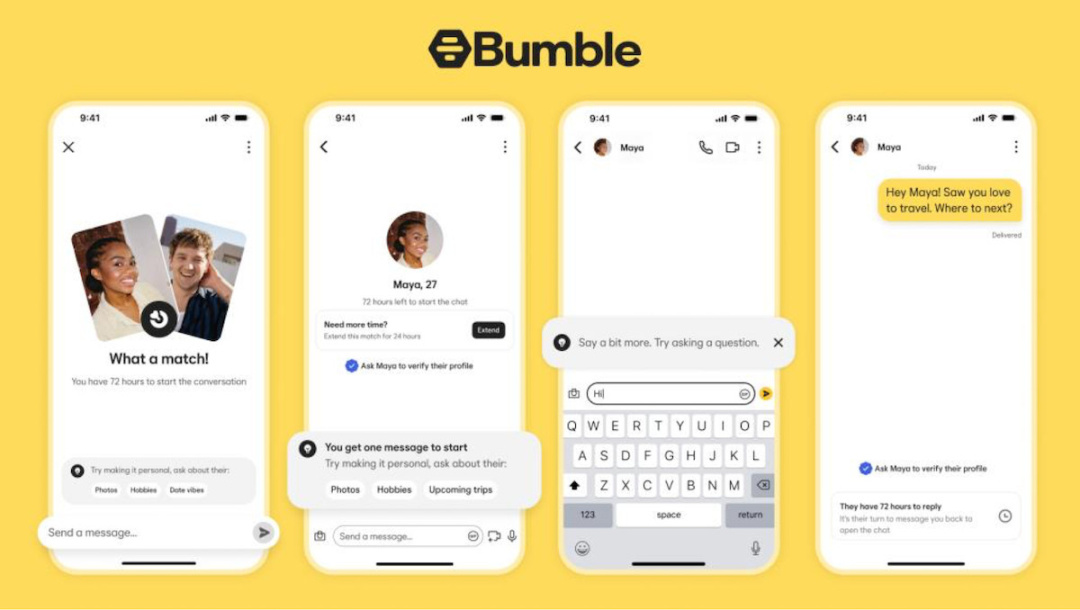
In a shocking policy shift, Bumble has announced that it will no longer require women to take the first step in online dating. This revolutionary approach, which has officially opened the floodgates for men to initiate conversations, is heralded as a breathtaking evolution in gender dynamics, allowing men to possibly say hello without fear of social retribution.
Bumble's CEO, Whitney Wolfe Herd, characterized this decision as an evolution rather than an abandonment of their core mission. "While women making the first move was a radical idea, allowing men to message first is simply about providing options," she stated firmly, as if this were a groundbreaking scientific revelation. Apparently, the app is now more focused on granting men the freedom to engage, alongside the monumental responsibility of writing that first message.
Objects of Questionable Importance
Must Have Sponsors.
The company, which has bravely championed the 'women message first' concept since 2014, is now boldly creating a more level playing field, where men can attempt to impress women with their fascinating pick-up lines. Bumble's new policy also comes with a generous 72-hour window for responses, likely designed to spare anxious daters from the agony of instant replies—a luxury previously unknown in the world of online flirting.
Bumble's survey data reveals that a staggering 66% of women surveyed actually prefer men to initiate conversations, suggesting that perhaps the app's founders were simply ahead of their time in creating expectations that were too high. As it turns out, women were ready for a dating platform that let them relax, knowing they might not have to carry the entire weight of initiating every single conversation. According to Herd, this renewal of empowerment for men is crucial for fostering 'real, meaningful connections'—a description that seems to overlook the irony of empowering the group that has historically held most of the power in dating.
Addressing declining revenues and the pressures of keeping up in a saturated market, Bumble is also exploring a future free from the swiping phenomenon altogether. This brave step into the brave new world of swiping alternatives indicates that Bumble may soon abandon all semblance of traditional dating practices altogether, perhaps opting for speed-dating events where both parties can awkwardly meet before asking for their phone numbers.
Despite the uproarious laughter from the industry, Bumble’s evolutionary step is likely to be celebrated as a move toward inclusivity, giving both men and women the chance to play a role in the initial awkwardness of online romance. With such a radical approach now in place, one must wonder how much longer traditional dating norms will hold up against this new wave of daring innovation.
As Bumble continues to navigate the emotional complexities of modern dating, one thing is clear: the pressure to reach out first has taken a monumental shift, and the world watches with bated breath as this pivotal moment unfolds.
Let it be known that the era of men messaging first is upon us, and Bumble has officially declared it a brave new world of dating possibilities, where everyone can awkwardly search for common ground, one message at a time.