Tauranga Girls’ College Students Present Eco-Statements at Fashion Week
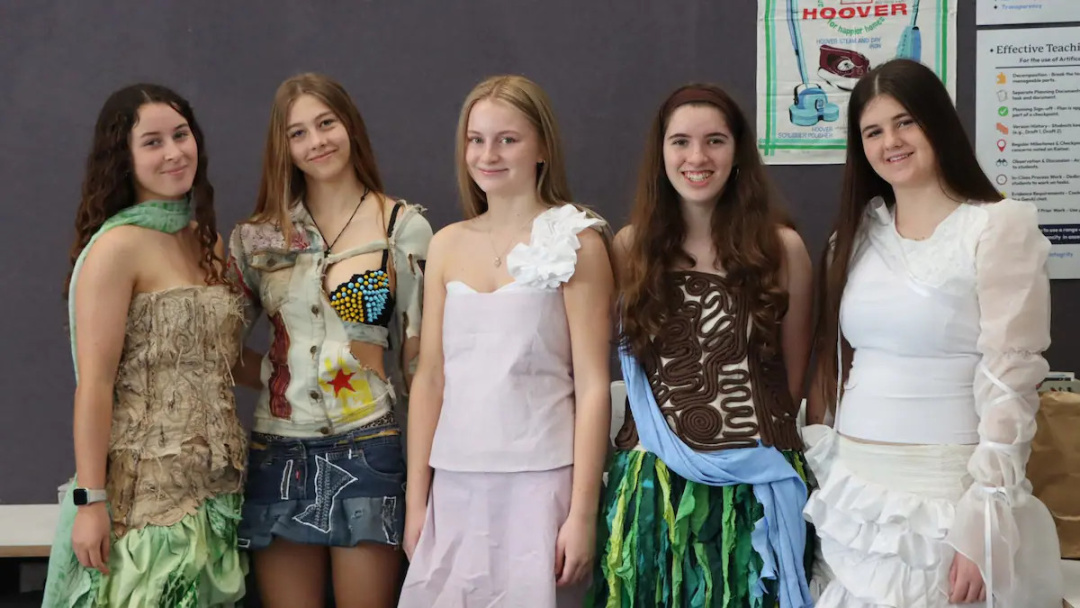
In an unprecedented intersection of adolescent creativity and eco-consciousness, students from Tauranga Girls’ College are preparing to take the runway by storm at New Zealand Fashion Week. Their innovative designs promise to redefine fashion standards, reminding society that looking good can come with a hefty dose of responsibility, or at least a hefty dose of seaweed.
Among the standout creations is a skirt fashioned from actual seaweed, which is sure to raise eyebrows and possibly create tidal waves of conversation about sustainability. The bodice of this avant-garde piece incorporates cording that is hand-stitched, mimicking the intricate root systems of trees while the blue fabric symbolizes the depths of oceanic beauty. Such designs are not only a testament to youthful imagination but also an alarming new marker of what it means to be fashionable in a world grappling with climate change.
Objects of Questionable Importance
Must Have Sponsors.
The students’ choice to draw inspiration from nature speaks volumes about the evolving landscape of fashion, where eco-friendly materials are now as coveted as they are bewildering. As these budding designers prepare to showcase their creations, one wonders if the audience will appreciate their commitment to the environment or merely admire their creative use of marine flora.
In this new age of fashion, where the boundaries between environmental activism and aesthetic appeal blur, the girls are embracing an impossible checklist of expectations. They are not just designers; they are eco-warriors fighting against the tide of fast fashion. Yet, the question remains: will wearing seaweed truly elevate one’s status in the fashion hierarchy, or will it simply become another fleeting trend?
As we watch this fascinating spectacle unfold, we must consider the absurdity of such standards. In a world where social media influencers dictate beauty norms, the idea of showcasing designs made from biodegradable materials is both radical and utterly essential. Can a skirt made of kelp earn you the same respect as one spun from the finest silk? The answer seems as elusive as the perfect shade of lipstick that complements every outfit.
The New Paradigm of Fashion Expectations
The irony does not escape us when observing that what was once merely a fabric choice has now turned into a moral imperative. As the students strut their eco-chic creations on the catwalk, the rest of society is left to grapple with its own wardrobe choices, wondering if their cotton tees are doing enough to save the planet. In an age where every aspect of life is meticulously curated, can one even afford to wear anything that isn’t ethically sourced?
The girls’ journey represents a larger dialogue about the future of fashion and the impossible expectations that accompany it. If they can graduate into the world of adult fashion wielding skirts made from the ocean’s bounty, we all must ask ourselves: what are we willing to wear to keep up? Perhaps it’s time to start exploring our own wardrobes for sustainable options or at least contemplate whether our choice of footwear is in line with the new fashion ethos.
Reality Check
As we navigate the complexities of modern fashion, it becomes evident that the ideals showcased at New Zealand Fashion Week are not merely about fabric and design but a reflection of societal values. The younger generation is poised to challenge conventional norms, proving that responsibility can be stylish, albeit with a dash of absurdity. As these students embrace their roles as design pioneers, we too must rethink what it means to be fashionable—balancing style with sustainability in a world that increasingly demands both.
In conclusion, while the designs at New Zealand Fashion Week may dazzle, they also serve as a sobering reminder that the future of fashion is woven with threads of environmental consciousness. The runway has never looked more like a battleground for ideals, and it’s about time we all start dressing for the occasion.