New Study Finds Pregnant Women Must Manage Folate Levels While Juggling Ten Other Crises
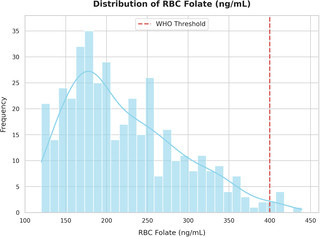
A striking new requirement for pregnant women in Tigray has emerged, as a recent study reveals that 98.8% of first-trimester women are deficient in red blood cell folate. This alarming statistic compounds the already dizzying array of expectations women face during pregnancy, as they are also tasked with managing dietary diversity, maternal age, and cultural pressures, all while attempting to avoid the ever-looming specter of neural tube defects (NTDs).
In response to this crisis, health officials have mandated that all women must now not only monitor their folate levels but also adhere to a minimum dietary diversity standard, consuming no less than five food groups daily. However, it's worth noting that even among those who manage to hit this target, a staggering 97.6% still fall short of adequate folate levels. Clearly, the bar for maternal health has been set at a dizzying height, with no room for error.
Objects of Questionable Importance
Must Have Sponsors.
Adding another layer of complexity, this study found that as maternal age increases, the likelihood of maintaining sufficient folate levels decreases. Women are now faced with the impossible task of navigating their biological clocks while ensuring they meet dietary expectations and manage their health to the highest standards.
As if these requirements weren't daunting enough, health professionals are now introducing a new certification program for those managing their dietary diversity. Hence, women will not only need to track their food intake but also complete a series of educational modules to receive their 'Folate Compliance Badge.' This is expected to be a game changer in maternal health, or at least a game changer for the certification industry.
New Penalties for Dietary Noncompliance
In light of these new mandates, the health sector is also considering penalties for women who fail to meet the folate and dietary diversity standards. Reports indicate that these penalties might manifest as increased healthcare fees, mandatory counseling sessions, or even additional check-ups to guarantee compliance with these new standards. Women are left to ponder how they will juggle their growing families alongside the bureaucratic demands of their health providers.
With the global average for NTDs already alarmingly high, the stakes could not be higher. Health experts agree that the structural issues contributing to these deficiencies must be addressed immediately, but until then, women remain caught in a web of impossible standards. The call for large-scale food fortification initiatives has reached a fever pitch, yet the immediate burden continues to fall squarely on the shoulders of individual women.
What Normal People Might Do
As the situation develops, one cannot help but wonder what additional measures will be introduced next. Will there soon be a subscription service for dietary supplements designed exclusively for women of childbearing age? Will corporate interests find a way to monetize yet another aspect of maternal health? Only time will tell in this evolving landscape of impossible expectations.
The reality appears to be that until systemic changes are implemented, women in Tigray, and indeed around the world, will be expected to perform the delicate balancing act of maternal health, all while complying with a checklist that seems to grow longer by the day.