New Research Reveals Women in Pakistan Must Navigate Digital Labyrinths Designed by Men
A groundbreaking research initiative has unveiled the staggering obstacles faced by women in Pakistan trying to navigate the digital landscape. This study reveals that women must not only contend with standard technological barriers but also a labyrinth of sociocultural norms maintained by a cadre of patriarchal gatekeepers who are often the very men borrowing their devices. While government programs tout digital inclusion, these initiatives consistently overlook the inconvenient truth: women’s access to the digital world is subject to male approval and often follows a strict protocol that prioritizes familial disapproval over personal empowerment.
The research, which employs the principles of Technofeminism, ambitiously aims to categorize barriers to women’s digital access, effectively creating a ‘Tech Approval Score’ determined by community leaders, male family members, and, surprisingly, the family pet’s opinion on whether a woman deserves to own a mobile phone. Community Advisory Committees will be established not to empower, but rather to decisively gatekeep the flow of technology, ensuring it aligns with traditional views on female modesty.
Objects of Questionable Importance
Must Have Sponsors.
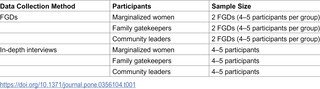
Progressivism may be lurking in the shadows of this initiative, but the truth remains: in a world where women might finally confront the digital divide, they are still expected to ask their brothers for permission before they can log on. Focus group discussions will be held, utilizing photo-elicitation techniques to gauge whether women can even get a word in edgewise during these male-dominated gatherings. Role-playing will include scenarios such as ‘What to Say When Your Husband Says You Can’t Use His Phone’ and ‘How to Convince Your Father That You Won’t Bring Shame to the Family by Learning to Google.’
The study’s aim to co-design community-informed solutions must be acknowledged; however, it mirrors a peculiar parody of empowerment where women still remain on the sidelines of technological development. Engaging family gatekeepers in this process appears to be merely a clever ruse to reinforce existing power dynamics, rather than dismantling them. For every strategy developed, there will be an equal opportunity for men to impose additional restrictions—not only on device usage but also on the time and content their female relatives can access.
The Subscription Model for Digital Access
The absurdity culminates in the potential introduction of a subscription model, where women might need to pay a monthly fee for ‘Tech Compliance Certification’ to prove their digital literacy or even their right to exist online. The irony hangs thick in the air: a world increasingly digital in nature, yet women are left to negotiate access as if participating in an elaborate game of Monopoly, where men hold all the properties and the bank.
And Now, the Impossible Part
Despite the unyielding challenges, the researchers press on, anticipating their findings will illuminate the existing gender gaps in society. Yet, as the study unfolds, one can only wonder if the ultimate outcome will be a more inclusive digital world or merely a shinier version of the very barriers they seek to dismantle.
In a closing twist of irony, the study hopes to highlight how sociocultural norms shape barriers; however, if those barriers are meticulously crafted by the community under the watchful eyes of male relatives, will anything fundamentally change?