New AI Trend Transforms Women Into Vintage Film Icons, Demands Perfection
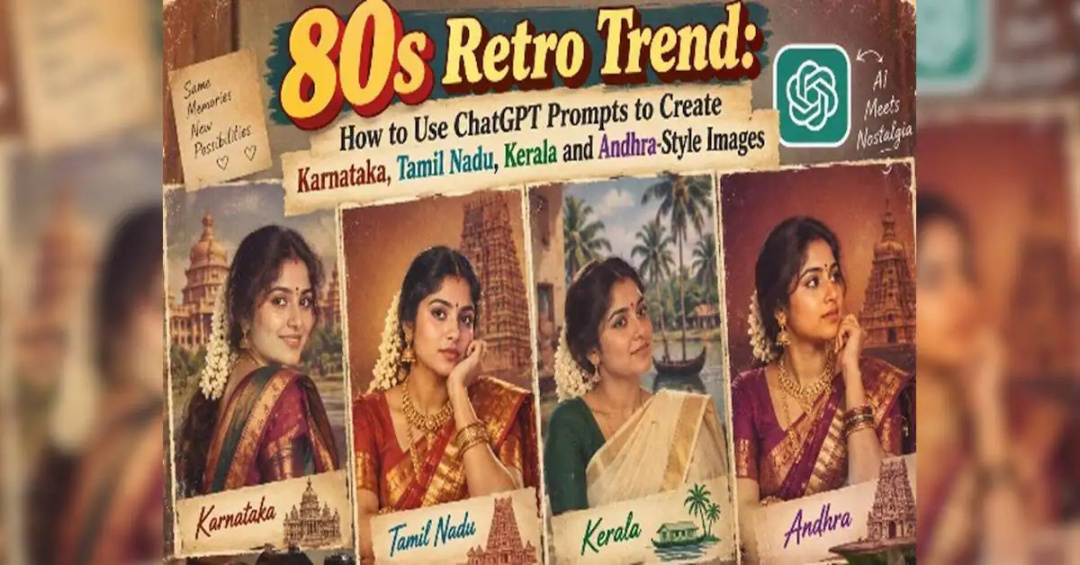
A groundbreaking new trend has emerged on social media, leveraging AI technology to transform women into flawless depictions of 1980s South Indian film icons. Users are harnessing the power of ChatGPT to create digital avatars that evoke the charm of yesteryear, featuring luxurious silk sarees and perfectly styled hair reminiscent of stars like Rajinikanth and Sridevi. However, this transformation comes with a set of escalating and absurd standards that women must now adhere to in order to maintain their influencer status.
In this AI-driven fantasy, women are not only expected to dress like their vintage counterparts but must also embody the entire aesthetic lifestyle. This includes adopting the exact makeup practices, mastering the art of dramatic poses, and even mimicking the expressive gestures seen in classic films—all while seamlessly integrating these elements into their modern lives. Influencers are now advised to create content that blends the nostalgic charm of the past with the relentless demands of today's digital marketplace.
Objects of Questionable Importance
Must Have Sponsors.
As if that weren't challenging enough, the trend also stipulates that participants be certified as 'Authentic Vintage Aestheticians' before posting their creations. This certification requires extensive training in 1980s film history, makeup application, and even the cultural nuances of South Indian cinema. Women who fail to obtain this certification face penalties of diminished social media engagement and the risk of being labeled as "inauthentic." The pressure to appear genuine while adhering to rigid historical standards is mounting, ultimately driving women to curate their lives to fit a bygone era.
The Commercialization of Vintage Perfection
Moreover, the commercial implications of this trend are staggering. Beauty brands have jumped on the bandwagon, launching entire lines of products designed to replicate the era's look and feel. From specially formulated hair oils that promise to achieve the perfect 1980s volume to vintage-inspired sarees that come with hefty price tags, consumers are now expected to invest not just in their appearance but in a time capsule of unattainable beauty.
For Those Still Living on Earth
Amid all this, algorithms have begun penalizing influencers for failing to adhere to these new standards. Posts that do not fully capture the essence of the vintage aesthetic are being downgraded in visibility, thereby reinforcing the pressure to conform. Women are now caught in an endless cycle of content creation, striving to meet the whims of fluctuating algorithms while also living up to an ideal that seems to shift just out of reach.
As the trend evolves, it raises the question: how many more layers of absurdity can this requirement pile on? Reports indicate that influencers are now prioritizing vintage aesthetic training over traditional self-care routines, leading to a bizarre landscape where self-worth is measured by one's ability to emulate fictional beauty standards from decades past. The final absurdity? Influencers must now report their 'vintage aesthetic engagement scores'—a quantifiable measure of how effectively they recreate historical beauty trends in their social media presence, ensuring that compliance remains just out of reach, much like the elusive perfection they are chasing.