Razer's New Keypad Requires Players To Conform To Unattainable Precision Standards
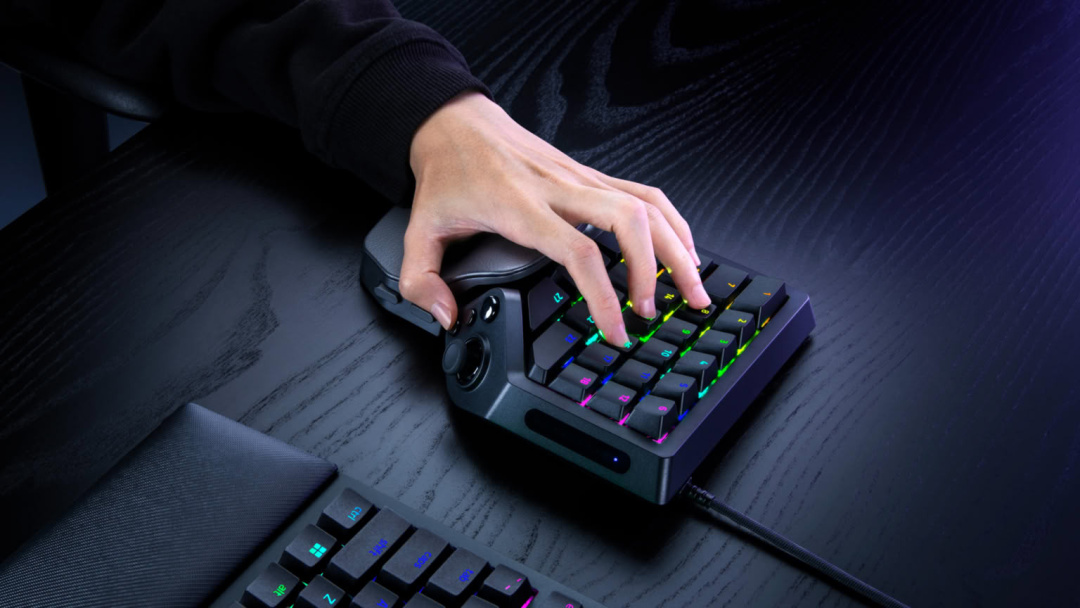
Razer's latest release, the Tartarus V2 Pro, sets an unprecedented standard for gaming keypads, demanding players master a new level of gaming proficiency akin to the precision expected at the Olympic Games. With a staggering 31 programmable controls, this device suggests that any less than flawless execution is simply unacceptable, pushing users toward a relentless pursuit of customization that is as exhausting as it is exhilarating.
This device truly pushes the boundaries of ergonomic design by introducing a wrist rest that adapts to the player rather than the other way around, a feature that can only be described as revolutionary in a world where a simple half-inch adjustment has historically required extensive yoga training. The rest even rotates, appealing to the whims of every individual's gaming style, because why shouldn’t a keyboard adjust to every intricate twitch of a gamer’s wrist?
Objects of Questionable Importance
Must Have Sponsors.
The Tartarus V2 Pro boasts a polling rate of 8000 Hz, which is impressive compared to the industry standard but perpetuates the narrative that gamers must always be on the cutting edge—or be left in the digital dust. This means if you're not experiencing all 8000 of those hertz in a split second during your gameplay, you're essentially throwing your competitive edge into a black hole.
Further complicating this new paradigm of gaming is the introduction of Razer’s Analog Optical Switch Gen-2, which invites players to fine-tune their actuation sensitivity down to an almost unholy 0.1 mm. This feature demands a delicate touch that only the most dexterous fingers can master while simultaneously suggesting that average players must now engage in a form of finger aerobics to keep pace with top-tier competition.
The Burden of Complexity in Gaming
In a world where gaming first began with a simple joystick and button, the Tartarus V2 Pro stands as testament to the fact that simplicity is no longer an option. The rise of complex gaming keypads creates an environment where anything less than extensive setup and configuration is met with disdain. This expectation is fueled by Razer's push for increased control and flexibility, reminding players that failure to optimize their gaming equipment could easily lead to social ostracization within the gamer community.
The ongoing escalation of gaming device capabilities offers players the chance to configure up to 24 keymaps across three onboard profiles. However, the real comedy comes from the notion that players now have to remember which of their multiple profiles corresponds with which game, potentially turning gamers into walking encyclopedias of their own customized controls—a feat that could take years to master.
The Complexity of Gaming Perfection
Ultimately, the Tartarus V2 Pro exemplifies an industry that thrives on impossibility, where each new feature is less about achieving a better gaming experience and more about ensuring no one ever feels comfortable with their setup. As players scramble to keep up with the demands placed upon them, they are left to wonder if they might be better off trading in their gear for a simple board and a bit of imagination.
Razer has set the bar absurdly high, suggesting that anything less than total mastery over the gameplay experience is mere mediocrity. The pressure to comply with these emerging standards means that players must not only excel in their games but must also become mini-experts in their own hardware, leading to the unyielding reality that gaming is no longer just a pastime; it’s a lifestyle burdened with the weight of expectation. In the end, the new Tartarus V2 Pro is not merely a tool for success but a gateway into a labyrinth of compliance that no gamer can hope to escape unscathed.