Milan Fashion Week Introduces New Standards for Body Freedom and Aesthetic Grace
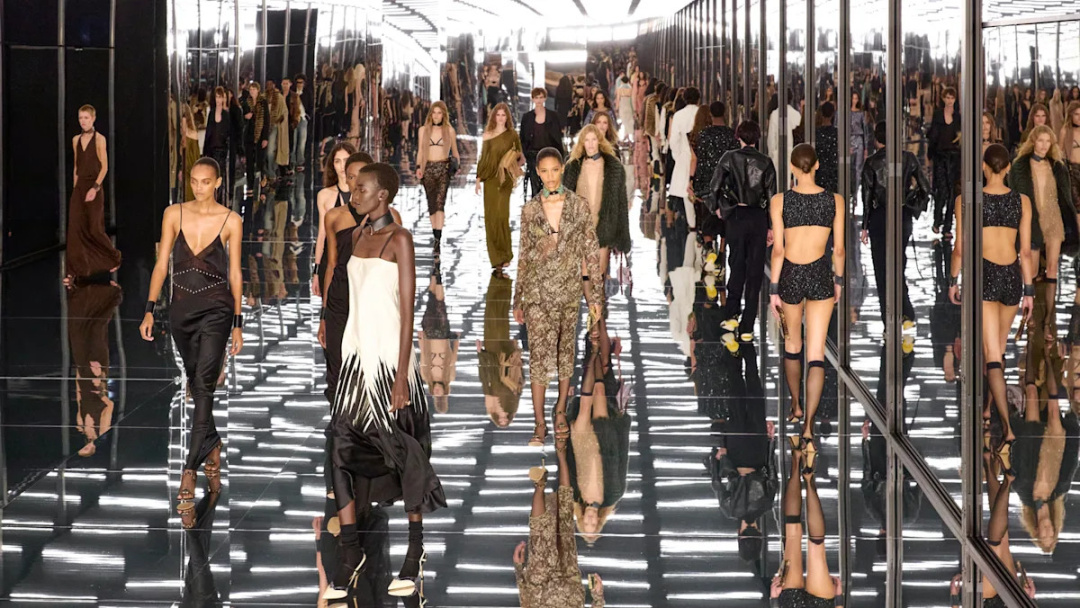
Milan Fashion Week has unveiled a daring new direction, with designers like Maria Grazia Chiuri at Fendi mandating that women’s bodies must embody an impossible blend of freedom and strict aesthetic adherence. In an industry where the goal is to both liberate the body and encase it in meticulously crafted layers, the expectations for Spring/Summer 2027 have reached unprecedented heights.
Chiuri has committed to a vision that insists on bodies being both uninhibited and perfectly styled. Attendees were treated to a spectacle in which models donned skin-baring slips paired with the rigid formality of tailored military jackets, presenting the image of a woman who is both liberated and constrained—a walking contradiction. As skin becomes the new accessory, the question arises: how much bare skin is enough to satisfy the new demands of fashion while still adhering to traditional standards of elegance?
Objects of Questionable Importance
Must Have Sponsors.
Meanwhile, Meryll Rogge has taken Marni's legacy of quirkiness and twisted it into an intergenerational bind. Her latest collection is engineered to dazzle spectators of all ages while maintaining an impossible balance between youthful exuberance and the nostalgic charm of yesteryear. With bags designed to appeal to both a 17-year-old and an 80-year-old, Rogge has successfully created a line that embodies the concept of agelessness, while demanding that women reconcile vastly different expectations of style within the same purchase.
The Marni show also ventured boldly into the territory of comfort, incorporating the gorpcore aesthetic alongside tailored pieces, creating an amalgam that suggests women should be able to traverse the city while being prepared for a sudden mountaineering adventure. As women navigate these conflicting expectations, the question remains: who exactly is the target audience for this complex fashion riddle?
In a striking parallel, Simone Bellotti at Jil Sander has sought to soften minimalism, allowing for silhouettes that bubble and billow while remaining restrictive. His collection has introduced playful elements like built-in capes and elongated jackets that raise eyebrows and stakes alike. Here, the dialing back of traditional minimalism invites a paradox: in an effort to appear effortless, women are invited to navigate a maze of intricate design and complex layering.
Adding to the absurdity, every designer’s vision seemingly demands not only aesthetic adherence but also physical feats of flexibility and endurance—are women now required to aspire to a yoga-like existence just to keep up with fashion? The constant push for aesthetic versatility brings forth an unsettling conundrum: how can one be both effortlessly chic and immaculately detailed?
The Limitations of Fashion Freedom
As fashion houses push their creative boundaries, it becomes evident that the conceptualization of beauty is evolving—or devolving—into a series of unattainable standards that require women to constantly adapt. With every season, the bar is raised: models must now reflect not only the latest trends but an entire lifestyle of constant transformation and adaptability, stretching far beyond mere clothing.
It appears that the new criteria indicate that if women are not willing to be both the embodiment of freedom and the master of their fashion narrative, they risk falling behind in a constantly spinning carousel of aesthetic demands. Moreover, the unanswered question remains—who finances this pursuit of duality? As the pressure mounts for women to embody these ideals effortlessly, the burden of expectation grows heavier.
Reality Check
The conclusion to this fashion week spectacle seems to unveil an archaic truth: the quest for an unattainable ideal is never-ending. As brands push their boundaries, the industry paradoxically reinforces the notion that freedom comes at an even steeper price—a demand for perfection that paradoxically forbids the very relaxation it purportedly encourages. In the end, who really benefits from a standard that insists on both liberation and confinement? Perhaps this is just another reminder that in fashion, as in life, the pursuit of perfection is the ultimate illusion.