Indian Fashion Designers Required to Completely Reinvent Cultural History for Global Acceptance
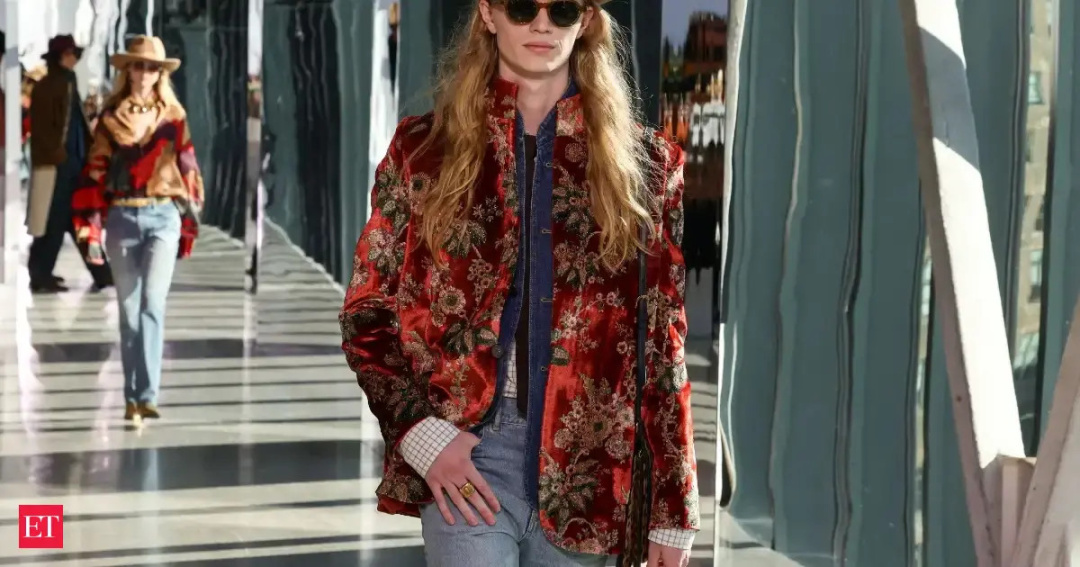
In an astonishing new mandate from the global fashion industry, Indian fashion designers are now required to completely reinvent cultural narratives before stepping onto the international stage. This development comes as designers like Gursi Singh and Amrita Khanna successfully debut at major fashion weeks in London and Milan, presenting an unprecedented challenge: aesthetically pleasing creations must now be backed by entirely fabricated histories that satisfy the most demanding global audiences.
The new regulations dictate that any garment presented must be accompanied by an elaborate origin story that marries mythological references with contemporary cultural critiques. In a recent statement, the Fashion Futures Council emphasized that authenticity is no longer enough; prospective designers must create a historical context that aligns perfectly with Western preconceptions of exoticism and luxury. This, of course, means that any traditional garment is immediately suspect unless it can be rebranded as a modern art piece echoing centuries of profound thought.
Objects of Questionable Importance
Must Have Sponsors.
As a result, designers are inundated with requests to provide not just fabric swatches but also comprehensive documentation detailing the philosophical underpinnings of each design. The council has introduced an escalating series of penalties for those unable to meet these new expectations, including temporary bans from prestigious fashion events and mandatory workshops in "Cultural Storytelling 101." These courses promise to teach designers how to spin yarns as dazzling and intricate as the fabrics they create.
Further complicating matters, the industry has adopted an innovative scoring system that rates designers not only on fabric quality and design but also on the depth of their narrative's richness. To aid in this endeavor, a subscription service called "Narrative Enhancer" has emerged, offering tiered pricing for professional ghostwriters who specialize in crafting compelling yet entirely fictional backstories. At the top tier, designers can even access a bespoke team of mythologists and historians who will ensure their narratives resonate with a global audience craving authenticity.
The Paradox of Cultural Sensitivity in Fashion
Amidst these absurd upgrades, the demand for exoticism has never been higher. Designers are expected to not only participate in global fashion weeks but to also ensure their contributions reflect the highest standards of cultural sensitivity... all while creating collections that are, paradoxically, deemed effortlessly chic. As the stakes rise, fashion designers are now left with the impossible task of balancing personal expression with the demands of global audiences who expect both a nod to tradition and a leap into the future.
Unfortunately, Facts Have Entered the Chat
As a final stroke of irony, the Fashion Futures Council has implemented a new certification program, requiring that all narratives be endorsed by a panel of international critics. This certification will be vital for showcasing designs at future fashion events, making it clear that in the world of fashion, not only is a designer’s imagination put to the test, but so is their ability to fabricate entire cultural legacies on demand.
Fashion has become a dizzying cycle in which all designers must navigate the interstices of expectation, creativity, and the relentless pursuit of authenticity, leaving little room for real individual expression or cultural appreciation. Who could have guessed that the runway would become more about historical revisionism than about the clothes themselves?