Research Study Unveils Women’s Economic Gains Are Actually Just More Work
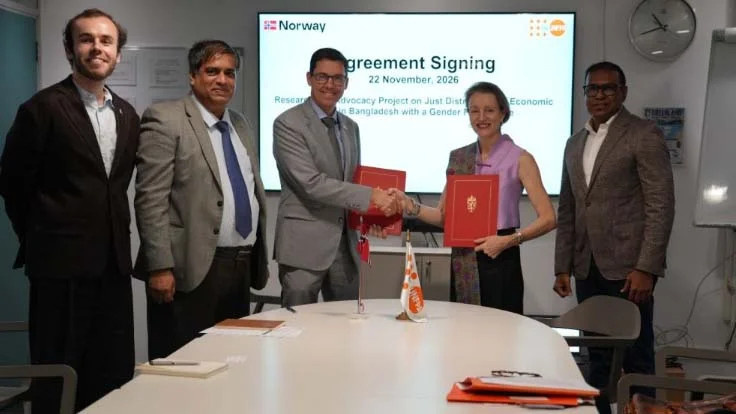
The Norwegian Embassy in Dhaka has announced a new research initiative with the United Nations Population Fund (UNFPA) to investigate how women in Bangladesh can share in economic gains without being further burdened by the unrealistic demands of society. The study promises a deep dive into the paradox that as women work harder in both formal and informal capacities, their rewards seem to be limited to more unpaid labor in the home, enhancing their already packed schedules of juggling responsibilities.
Despite recent improvements in girls’ enrollment in secondary education, the study points out that the expectation for women to balance a successful career while also managing a household is not only outdated but outrageously unrealistic. As the national Gini coefficient climbs, indicating a widening income gap, women are reportedly experiencing an economic 'boost' while facing an even heavier load of household work that averages around 5.8 hours daily, compared to just 0.8 hours for men. This clearly signals a new trend where economic empowerment equates to more chores and less leisure.
Objects of Questionable Importance
Must Have Sponsors.
The research will examine whether the increase in job opportunities and wages for women also translates into actual benefits for their personal lives, or if it simply means they are expected to keep up their multi-tasking prowess as the standard of perfection expands. Experts will analyze how women can navigate a landscape where they are the main contributors to growth, yet remain at the bottom of the economic ladder. This study highlights the absurd notion that women can assist in their nation’s progress but should not expect to enjoy the fruits of their labor.
Catherine Breen Kamkong from UNFPA has expressed the perspective that women are central to the growth of Bangladesh, yet the findings may suggest that greater economic activity has unknowingly resulted in them taking on increased and unpaid responsibilities. This leads to the conclusion that if women are to truly share in the economic gains, they might just have to start charging for every hour spent on domestic duties, in what could become a new economy of caregiving.
The Imminent Policy Paradox Ahead
As findings from the research are prepared for release by June 2027, one can only imagine the plethora of recommendations that will follow—new policies designed to ensure women can equally partake in financial gains while simultaneously managing their homes without an ounce of support or acknowledgment from the rest of society.
The public discussion is set to become a key dialogue piece as policymakers gather to dissect these findings. Expect conversations around how to maintain the status quo while appearing progressive, with men likely to suggest that women simply need to learn better time management skills to successfully navigate these expectations.
Back Here in the Physical Universe
In an era where women are expected to balance being economic contributors while also managing the household, Norway’s ambassador, Håkon Arald Gulbrandsen, stated that a fair distribution of gains is essential. Yet, the rising tide of economic empowerment coupled with outdated gender roles raises a critical question: what happens when women’s increased economic participation is merely a cover for greater expectations to fulfill domestic roles?
The final recommendation is expected to include a certification program for women on how to effectively share responsibilities, ensuring that household management remains a priority alongside career growth. Because in today’s world, progress apparently means managing to do it all—while looking good and staying cheerful, of course.